
How to Trash Talk: Lines That Work
Your rival just walked in confident, loose, talking a little too much for someone who hasn't won anything yet. You've got maybe ten seconds to say something back, and everything that comes to mind sounds either too weak or too mean.
This post gives you actual lines, from actual competitors, organized by what they're built to do, so you're never standing there with nothing.
Jump to:
Plant doubt before anything even starts
The night before the 1975 Mr. Olympia, Arnold Schwarzenegger sat down for breakfast with Lou Ferrigno and Ferrigno's family. Between bites, he said something like:
You know, it's amazing. Can you imagine the feeling I have? Six-time Mr. Olympia. Six times! It's incredible.
The competition hadn't happened yet.
He talked about winning it like it was already decided, calmly, at breakfast, in front of Ferrigno's own father.
The move here is treating the outcome as already settled. Use it the day before, or right before warmups, when your rival hasn't done anything wrong yet and has nothing to push back on.
A flat, matter-of-fact tone works better than a boastful one, because boasting invites an argument while stating a fact as already true gives them nowhere to push.
Use a detail against them
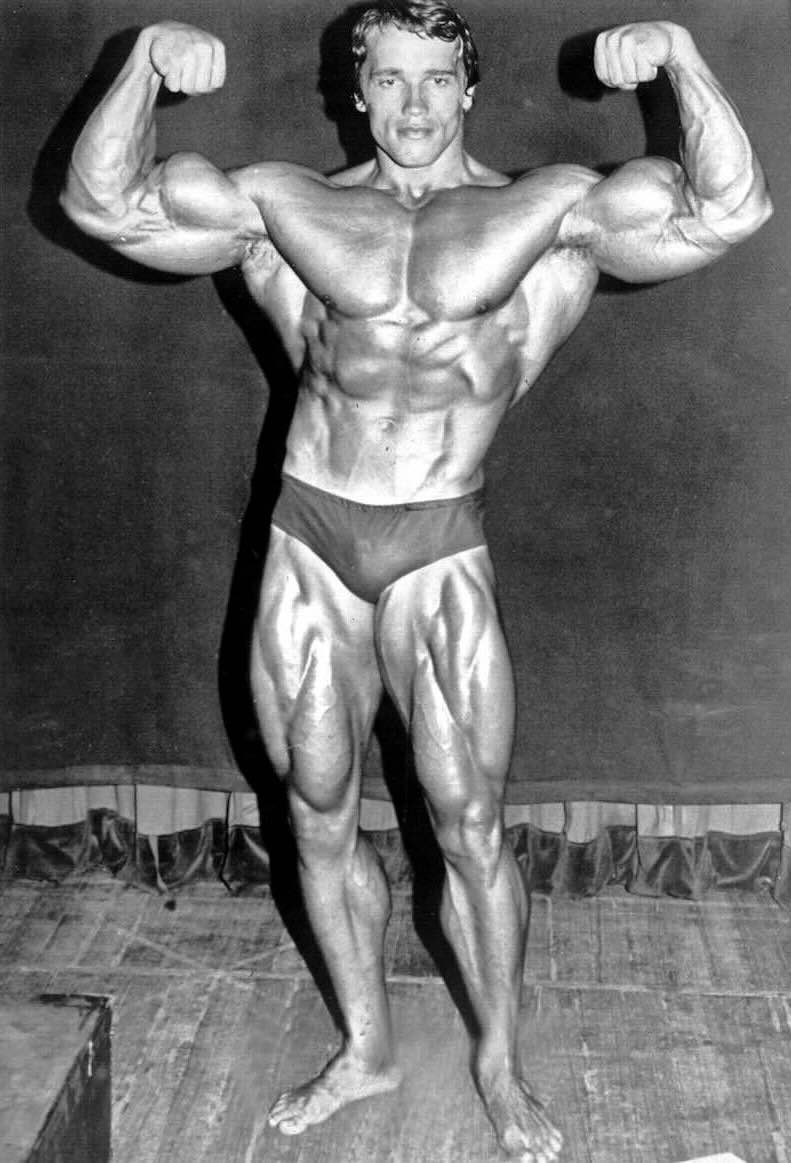
Schwarzenegger shared another one with Tim Ferriss. He'd walk up to a competitor and ask, with concern in his voice, if they'd hurt their knee, because their legs looked smaller than usual.
He made it sound as though he was genuinely worried about them. If he had merely mocked them, it wouldn't have worked.
A direct insult gives someone a target to fight back against. A quiet, concerned question about a physical detail gives them something to worry about instead, and worry is much harder to shake off in the twenty minutes before you compete than anger is.
Call your shot before you take it
Larry Bird did this constantly. He'd tell the guy guarding him exactly what he was about to do, where the ball was going, sometimes even calling the exact shot, and then he'd do it.
Teammates and opponents both described it as one of the most demoralizing things about playing against him, because it was a demonstration that he had that much control over the moment.
Before the 1986 Three-Point Contest, Bird walked into the locker room, looked around at a field that included Craig Hodges, Dale Ellis, and Trent Tucker, and asked one question: "Who's coming in second?"
Then he won.
Calling your shot only works if you can actually back it up often enough to make it believable. If you're new to a sport or clearly out of your depth, this one will just make you look like a talker.
Ask how they're doing it
Another trash talk idea comes from Timothy Gallwey's book The Inner Game of Tennis. And it's the one almost nobody seems to know about.
When an opponent is on a hot streak, hitting shots, moving well, Gallwey suggests asking them, casually: "What are you doing differently today, your shot looks great?"
If they take the bait and actually start explaining it, walking through their grip or their footwork or their breathing, the hot streak tends to break right there.
You've asked their conscious mind to go supervise something that was flowing unconsciously.
- Use it when someone's clearly locked in and you have nothing else to work with
- Ask it lightly, between points or possessions, never right after they mess up
- Don't follow up or push, one question is enough to do the job
Why some of these get under someone's skin and others bounce off
There's a well-known idea in psychology called cognitive load, sometimes called divided attention.
The basic version: your conscious mind can only actively work on so much at once, and splitting it between two things makes both of them worse.
That's exactly what's happening with the Gallwey question. A hot streak runs on autopilot, and the moment you ask someone to explain what they're doing, you've forced their attention off autopilot and onto analysis.
Their brain is now doing two jobs instead of one, and the performance suffers, without you having said anything remotely rude.
Arnold's breakfast comment and knee-injury question work on a related but different lever: they plant a thought that the other person then has to spend energy managing, whether they want to or not.
Once the thought is in, they can't fully un-think it, and thinking about it at all pulls attention away from what they're actually supposed to be doing.
How to stay loose enough to say the line
Here's the part most people get stuck on: you know a good line exists, but in the actual moment, standing across from someone, you choke because you're too far inside the moment to think clearly.
So if your chest tightens up right before you'd want to say something to an opponent, try this:
In your mind, picture the scene from a few feet outside your own body, like you're watching yourself and the other person from the sideline instead of from behind your own eyes. Watch yourself standing there.
Notice what the other person looks like from that outside angle.
That small shift takes enough heat out of the moment that you can pick a line on purpose instead of blurting the first thing that comes to mind, or freezing and saying nothing.
It works the same way if someone lands a good one on you. Step outside of yourself for a second, watch it happen like it's someone else standing there, then decide what you actually want to say back, then come back in and say it.

Ben is an ICF-certified coach and NLP master practitioner. He dives into psychology and neuroscience, then turns what he finds into tools athletes and high performers can use under pressure.
If this kind of thing interests you, you'll find more breakdowns like this one on the site.